
© 2026. Randolph Hub. All Rights Reserved.
Welcome!
Focus of annual REMC meeting comes down to affordability
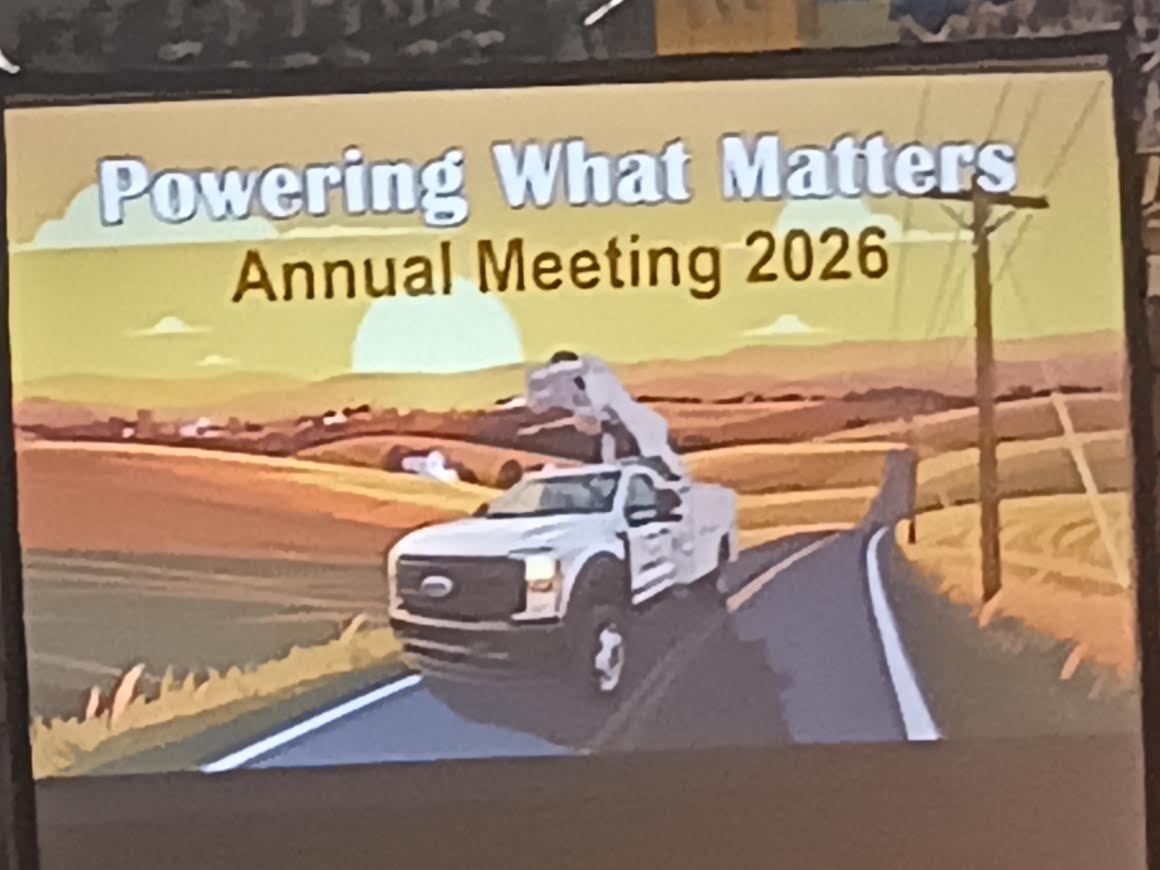
ASHEBORO — “Powering what matters” was the theme of the 88th edition of the Randolph Electric Membership Corporation’s annual meeting. But the focus came down to affordability.
The meeting took place June 19 at Southwestern Randolph High School with more than 800 members attending, including about 400 watching online.
Tammie Phillips, REMC board president, said reliability tops the list of member surveys and that the team is “dedicated to preserving our legacy of reliable service while safeguarding the integrity of the electric grid.”
She also noted that REMC is once again one of the highest-rated electric cooperatives in the nation, based on member satisfaction surveys.
Lee Isley, secretary-treasurer, assured the members that the cooperative is financially sound, with total revenues for 2025 of $85 million and total expenses of $77 million. The biggest expense, he said, was for purchased power at $45 million, or 53 percent of expenses.
While the finances were in good condition, CEO Dennis Mabe chose to focus on trying to keep up with rising prices. “We all feel it … the economic pressure,” he said.
“The economic pressure on our industry is certainly no different and continues to challenge us in many ways. You’ll hear me mention the word ‘stabilize’ more than once tonight. That is the goal — to bring cost stabilization to both our cooperative and our members’ wallets.”
‘Heavy costs’
Mabe talked about the “heavy costs” of purchasing and generating energy as well as distributing to homes and businesses.
“Our long-term strategy is to have more cooperative-owned resources in the future,” he said. “This will reduce the amount of more expensive generation we currently acquire through wholesale contracts.”
But REMC must deal with current costs and listed a number of examples of increases in costs, such as poles and wires to substations, vehicles and new construction projects.
“A wood crossarm for a pole has risen 222 percent in just the span of five years,” Mabe said. “Other things, like transformers and cable, have risen from 40 to 75 percent. When you multiply this by thousands of poles and miles of line, it adds up in a hurry.”
Right-of-way maintenance
Another cost factor is right-of-way (ROW) maintenance. Mabe said the cost of ROW contractors has risen significantly since their costs are also going up. Estimates for the coming year, he said, are for ROW costs increasing by a minimum of 61 percent, based on the lowest proposal from contractors.
Mabe said he couldn’t say there won’t be rate increases, but added, “If you see these reflected on your bill, know that they are the result of having done everything in our power to keep them as minimal as possible.”
REMC has received two federal grants, one of more than $4.9 million to rebuild transmission lines which will go to the Dover, Ether, Snow Camp and Staley areas. The second grant is more than $11 million, with a local share of $5 million, to expand the power of REMC’s self-healing grid by creating strong circuit ties to lessen the impact and duration of outages.
Data centers
Mabe then addressed data centers, which have received much negativity around the country. The concerns are about how much electricity data centers use and their strain on the power grid.
“To be fair,” Mabe said, “these are reasonable concerns that deserve conversation and consideration in any situation, and ours is no different.”
He then speculated that a data center could actually reduce costs for the cooperative and create benefits for REMC.
“When a large customer like a data center joins our system, they help share a larger chunk of these fixed costs,” Mabe said. “Data centers use power more consistently and at a larger scale than most members do. In doing so, they provide stable revenue that helps strengthen the cooperative financially. And that financial gain benefits every member-owner.”
He went on to say that there would be less upward pressure on electric rates over time and upgrades to substations, transmission lines and communications infrastructure. It could also lead to future growth, making communities more attractive to business and industry.
“Of course, as good as this sounds, none of it means we should jump right in,” Mabe said. “Any growth to our cooperative and its infrastructure should happen carefully. Our first priority has been, and will always be, our member-owners.”
In concluding, Mabe said, “I think this presents an accurate picture of where we are today and our plan moving forward. … In spite of the challenges ahead, I feel optimistic about the plan we have in place and look forward to building upon it with our highly dedicated board of directors.”