
© 2026. Randolph Hub. All Rights Reserved.
Welcome!
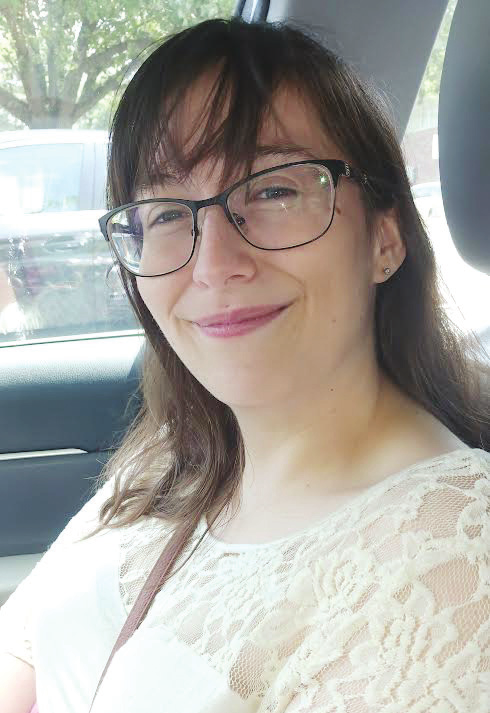
Emily Hicks is working to get the word out about Stickler Syndrome, a rare genetic disorder. (Photo: Larry Penkava / Randolph Hub)
Asheboro woman raises national awareness of a rare genetic disorder
ASHEBORO — Judging from her vibrant personality, you wouldn’t suspect that Emily Hicks has a rare, life-altering genetic disorder.
In fact, the genetically-transmitted Stickler Syndrome has also been passed on to her two sons.
But Hicks is determined to advocate for the condition and let those affected know they’re not alone. She started a blog called Living with Stickler, to raise awareness, educate and advocate for Stickler Syndrome.
Hicks, who lives east of Asheboro, said, “I live with Stickler Syndrome Type 1 myself and so do both of my two sons. After years of navigating misdiagnoses, medical uncertainty and the challenges that come with living with a rare disease, I made it my mission to ensure that others wouldn’t have to face the same journey alone.”
Stickler Syndrome is a rare connective tissue disorder that can cause vision and hearing complications, joint problems, disability, accessibility and chronic illness. And one problem can lead to another.
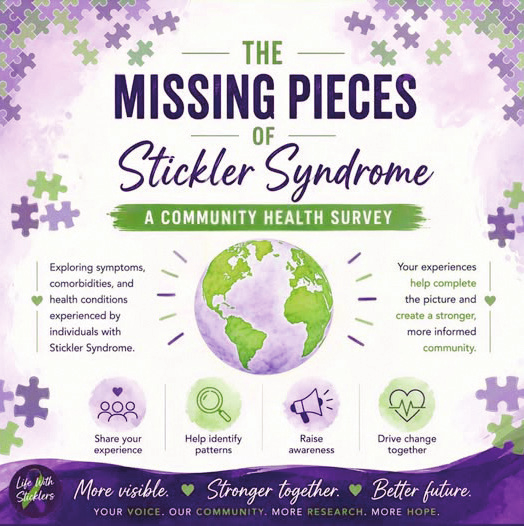
“Most recently, I launched The Missing Pieces of Stickler Syndrome, a community-driven survey designed to better understand the comorbidities and health conditions reported by people living with Stickler Syndrome,” Hicks said.
“The project aims to bring visibility to symptoms that many patients experience but that remain underrepresented in medical literature, creating a foundation for future research and discussion within the medical community.
“All my life I had symptoms but they were looked at individually,” Hicks, now 28 years old, said. “I had issues with my joints, seeing, hearing and easy bruising.”
None of those symptoms, considered alone, led to a diagnosis of Stickler Syndrome. It wasn’t until a chance occurrence during her first son’s birth that the real problem was determined.
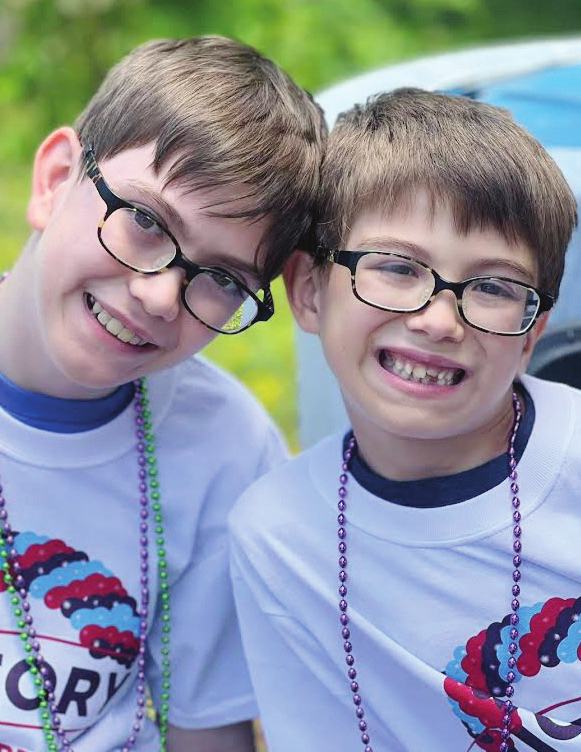
When her first son, Oliver, was born in 2014, he had trouble breathing and was sent to Brenner Children’s Hospital in Winston-Salem.
“A geneticist, Chad Haldeman-Englert MD, happened by and saw his flattened facial appearance. He recognized it as Stickler,” Hicks said. “He asked about getting him genetically tested. That unlocked the long-standing mystery. When the results came back, we learned we both had Stickler Type 1. There are six different types and Type 1 is the most common.”
Symptoms may include a flattened face, large-set eyes, arthritis, scoliosis, easy bruising, hypermobility (joints bend in a wider than normal range), hearing and vision loss.
Symptoms can also include a cleft palate, which Hicks and her two sons all were born with.
The key, Hicks said, is collagen, a connective tissue known as the body’s glue to hold things together. Studies have shown that “defective collagen molecules or reduced amounts of collagen affect the development of bones and other connective tissues, leading to the characteristic features of Stickler syndrome.” And it’s been found that mutations with certain genes are the causes.
Gunnar Stickler with the Mayo Clinic “found the symptoms and connected the dots in 1965,” Hicks said. “He evaluated a young boy with the symptoms and found that several other family members had the symptoms.”
With the knowledge of what was causing the symptoms, Hicks had a team ready for the delivery of her second son, Nolan, four years later. But even with the preparations, Nolan continues to have chronic pain in his joints.
During all those years of not knowing what caused her physical issues, Hicks often felt alone. But once she found what was behind her ailments, she chose to be an advocate, starting her Living with Stickler as a private Facebook blog in 2014. She made it a public blog in 2018.
Now it’s also on TikTok and Instagram.
“My goal was to have sort of a diary to share with the world, to let people know they’re not alone and to push for more research,” said Hicks. “A lot of families have been reaching out to say they got the diagnosis. It makes me feel good when I learn that someone has gotten answers.”
On her blog she posts research being done, education, and graphics to share. Currently, Hicks has a public survey concerning the symptoms on her blog for anyone to fill out. She eventually plans to post the survey results.
“In addition to my advocacy through Life With Sticklers, I was honored to serve as the North Carolina Chair Representative for Stickler Syndrome during The Marfan Foundation’s Walk for Victory in both 2025 and 2026,” Hicks said.
“Through these combined efforts, I have worked to unite patients, families, healthcare professionals and advocates with the shared goal of making a meaningful difference in the Stickler Syndrome community.”
The North Carolina Walk for Victory is held in Raleigh, usually in the spring. The Marfan Foundation uses the walk to raise money for a number of medical conditions, including Stickler Syndrome. Those funds are used to support research and to help families suffering from those conditions.
As the North Carolina representative, Hicks said, “I can put my face out there and connect with families. They meet me and ask questions.”
In addition, Oct. 1-7 has been designated Stickler Syndrome Awareness Week.
Hicks and her sons are clients at Duke Ophthalmology due to abnormalities with their retinas caused by Stickler Syndrome. She said one of the team members there asked them to be subjects in a study they’re doing. When the research paper comes out, it will include a photo of Hicks’ retina with its abnormalities. She said her sons were excited to be involved.
There is no cure for Stickler Syndrome and more research is needed. That’s why it’s important for more people to know about it and push for more studies.
Hicks said her life is “a story about an Asheboro resident turning personal adversity into advocacy, using lived experience to educate thousands of people around the world, support families searching for answers, and help shine a light on a condition that remains largely misunderstood.
“If my story can help one person, it’s a good cause.”