
© 2026. Randolph Hub. All Rights Reserved.
Welcome!
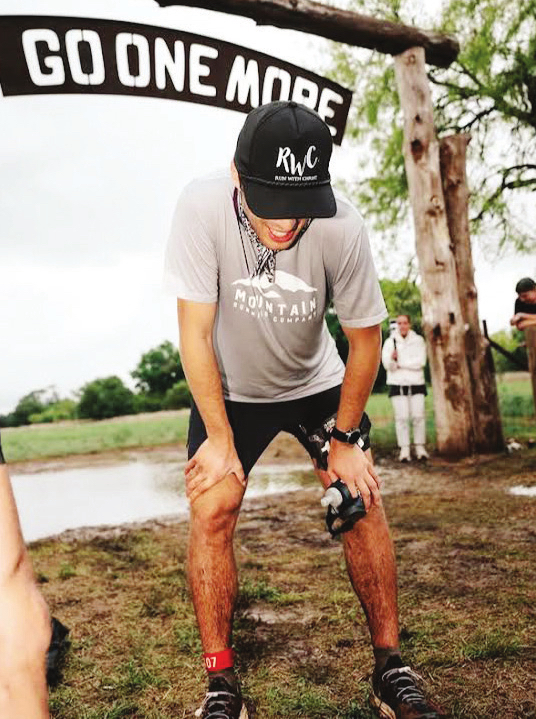
After topping his goal of 200 miles and finishing a 4.2-mile run for 49 straight hours, Rhett Bolick, 22, of Asheboro was all smiles. He finished 5th out of the 145 runners who competed.
204 miles, 49 hours: Local man puts himself on map
ASHEBORO — Last Man Standing is pretty much self-explanatory. In whatever the event, the last participant standing is declared the winner.
Over the years, there have been danceathons, where the last couple remaining on the dance floor wins. There have been last man standing golf tournaments, professional wrestling matches and video game battles that all use the last man standing criteria to declare the winners.
But a last man standing in a running competition, a competition that lasts for days and requires the participant to get very little sleep, pushes the body to the edge of exhaustion and experiences pain unlike any other?
Certainly no one would commit to such an event.
Oh, yes there are. A lot. And one lives right here in Asheboro.
Rhett Bolick, 22, is that unique athlete who not only runs marathons and 100-mile running events, he ventured into a totally new world in mid-April. He ran in the Go One More, an ultramarathon where the participant must run 4.2 miles each hour he is in the competition.
It is an event which is most likely the absolute mecca of putting your body through every kind of pain and emotion. It represents the mental and physical endurance required to push beyond perceived limits.
“Well, I knew it was going to be very painful,” Bolick said. “I knew it would be a long time and I had to prepare myself mentally. I knew I was going to be out there a long time and I had to calm myself down. I was pretty nervous just because of the long road ahead.”
At the start of each hour, participants must run through a loop measured at 4.2 miles. After completing the 4.2-mile loop, which features flat land, hills and rough terrain, whatever time the runner has remaining from the one-hour time limit he may use to rest, eat or strategize.
But at the beginning of the next hour, each runner must begin to complete the 4.2-mile loop again. Runners are eliminated (DNF - Did Not Finish) if they fail to complete the loop within the hour or fail to enter the starting “corral” on time.
This continues until there is one man standing.
“I have been thinking about it and haven’t had a for-sure answer,” Bolick said on why he would put himself through this. “I guess maybe there’s a few reasons. I love being outside and I enjoy pushing myself and working toward a goal.
“It’s not always fun. About 100 miles in, I was asking myself, ‘Why the heck am I doing this?’ I think in today’s world, we are all so comfortable. A little bit of hurt and having to push through mentally, it gives me joy. I was hurting really bad and I pushed through.”
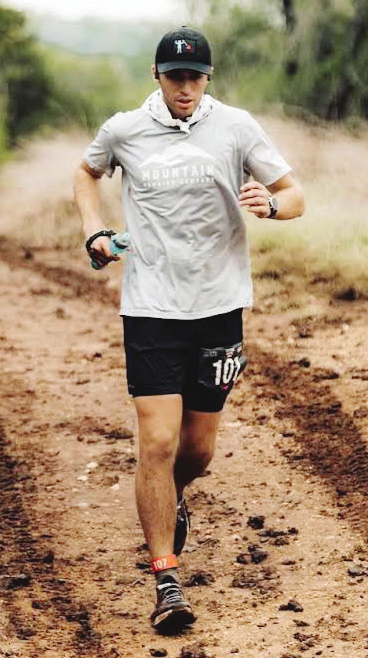
Push through he did. Hour after hour after hour after hour. Of the 145 from all over the world who ran the meet, Bolick finished a very impressive fifth, running a total of 204.209 miles in 49 hours.
Bolick ran his first loop in 49:32, 10th loop in 39:39, 20th loop in 48:38, his 30th loop in 50:02, his 40th loop in 50:00 and 49th and final loop in 49:51. He ran for a total of 41 hours and 9.05 minutes.
Bolick said his goal was to run at least 200 miles. He shattered that.
The top four runners in the meet, including winner Mark Dowdie who ran 73 loops in 65 hours, were all sponsored and could be considered “professional” runners, while Bolick was truly unknown in the world of ultramarathons — until that week.
“I’ve had people tell me you could get 100,000 followers right now,” said Bolick, a 2021 graduate of Asheboro High School who played two years of soccer at Pfeiffer University before transferring to UNCC for his undergraduate work in becoming a P.A.
“I like to keep to myself. I used to have (social media), but I deleted it far back. Next year, if I do this, I’ll probably reach out to some companies. They could get a lot of publicity.”
Bolick, an EMT in Forsyth County, finds time to train by waking up as early as 3 or 4 a.m. in the morning for a workout. He says he runs between 80 and 90 miles per week.
Bolick took on the Go One More after participating in three 100-mile runs, a competition where the competitors complete a 100-mile run in as little time as possible.
“You just run for 100 miles and do it as fast as you can,” Bolick said. “I did one in October in Troy and the cutoff was 36 hours. I did it in 23 hours. In the 100-mile races, I won’t sleep at all. I am going the whole time. Pushing my body, It’s not at a slow pace. If you train correctly, you can push yourself.”
During the Go One More event, which was held in Round Rock, Texas, each participant is given a small space in which he could put a tent, cot, table or lounge chair on or store provisions to help him make it through. He is also allowed to have a crew, people who are there to support him, encourage him, provide massages, get food ready or any other task that needs to be performed. Bolick had his parents, brother, girlfriend and two friends who would take shifts throughout the more than two-day affair.
“I couldn’t do it without them,” Bolick said.
While running, Bolick says he often attempts to strike a conversation with other runners. Sometimes it works, sometimes it doesn’t.
“As the race went on, a lot of people were in more pain and they go quiet,” he said. “I like to think I’m a faithful person. I spent a lot of time talking to God and asking for strength. There were some rough times on the course.”
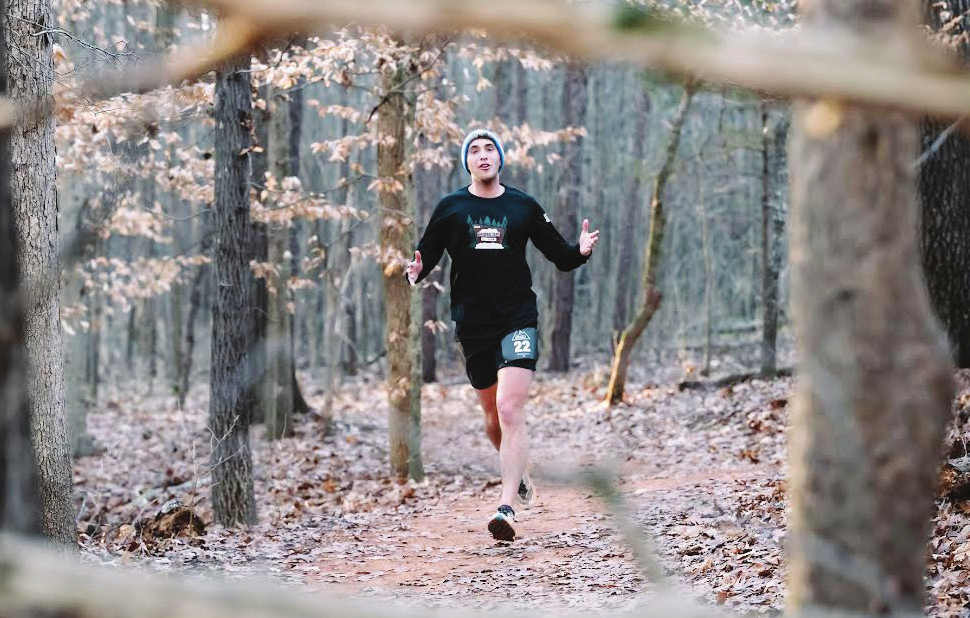
Sleep, of course, is rare. Bolick said if he can sneak in a five-minute nap, or at least close his eyes for a few minutes, it is very beneficial.
Bolick said he fed on mashed potatoes, ramen noodles and smoothies.
“Sixteen miles in, I was starting to have gut issues,” Bolick said. “That’s a problem you have to solve. What do I eat to have time for that food to digest? My legs started hurting 100 miles in. No way you can run 100 miles and your legs don’t feel it.”
But he pushed on. On and on and on.
“After the second night, I was approaching 200 miles,” Bolick said. “Let’s say it was mile 180 and it had been raining a lot. We were running on muddy trails. In my head, I didn’t know if I could run 200 miles any more. I told my crew. They kept encouraging me to keep going out there because my goal was 200 miles.
“For me, a successful trip would be 200 miles. I was going to quit at 200 miles, but I had a lot of people there cheering me on and everyone convinced me to go one more.”
After 49 loops, Bolick dropped out, but the emotions were just starting.
“Thank goodness,” he said was his first thought after the race. “Thank God. After these things, people cry. I didn’t want to quit, but I had so much joy. I was happy with what I did. I had nothing but positive feelings.”
Bolick said he sat down in a chair for about two hours.
As expected, it takes weeks for a body to recover from the rigorous event.
“This is the first week I felt normal,” he said on April 28. “There were two weeks where I didn’t feel all the way there. I couldn’t think clearly.”
Bolick said he hopes to run future ultramarathons in Colorado, California and possibly even Europe.
“I have seen the influence this has had in other factors in my life,” said Bolick, who is applying to PA school. “I think my goal next time would be to win and get 300 miles.”
Bolick said YouTube is currently working on a documentary of this year’s event and it should be available soon. Then everyone can see what it takes to compete in a race such as this from the comfort of their own couch.