
© 2026. Randolph Hub. All Rights Reserved.
Welcome!
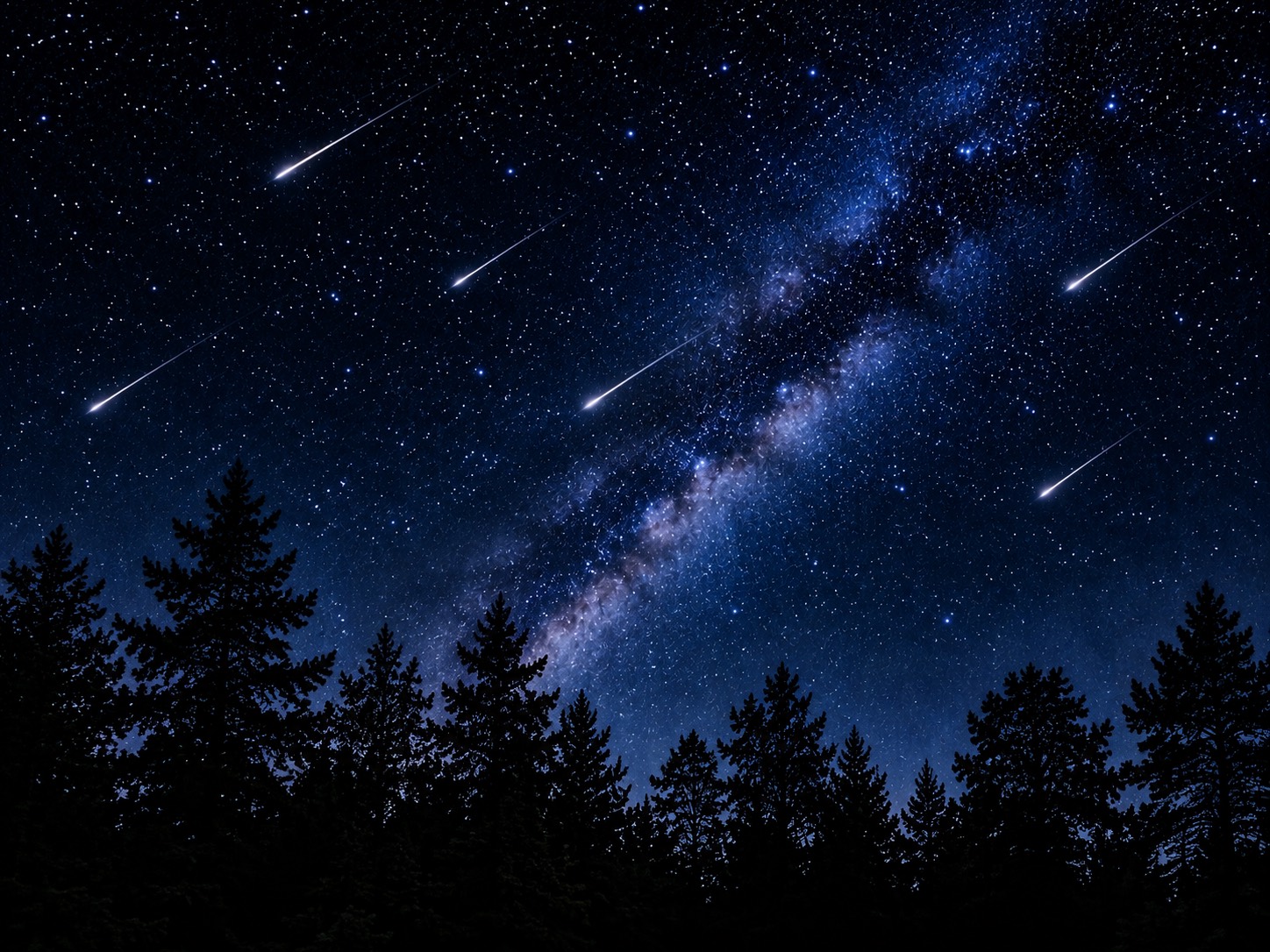
The meteor showers in November may look something like this AI-generated image.
Space Calendar: What to scan skies for in November
Some events to check out in the night skies in November:
Nov. 5-12
Taurids Peak
The Taurids put on a double show this month.
The Southern Taurids peak on Thursday, Nov. 5, and the Northern Taurids follow on Thursday, Nov. 12, part of a long-running meteor shower that stretches from late September into December.
Rates are low, at only five to seven meteors an hour at best, but the Taurids make up for it in spectacle.
The shower is known for
slow meteors that often turn into fireballs, which earned them the nickname “Halloween fireballs.”
Both peaks fall close to the New Moon on Nov. 9, so only a thin crescent Moon is in the sky, leaving dark skies for fireball hunting.
The best time to watch is the late evening or pre-dawn hours, with midnight ideal as the constellation Taurus climbs high overhead.
No special equipment is needed. Just look toward the southern sky around Taurus, get away from heavy city light pollution, and give your eyes about 20 minutes to adjust to the dark.
November nights in the Piedmont can get crisp, so dress in warm layers and bring a reclining lawn chair or blanket. Be patient. You won’t see a constant flurry of streaks like with some other showers, but a single slow-moving fireball makes the wait worthwhile.
Nov. 16
Mars and Jupiter
close together
Mars and Jupiter will appear close together on Nov. 16, passing within about 1 degree of each other, roughly two full
Moon widths or the width of your thumb held at arm’s length.
From the Piedmont, the pair rises in the east around 11:49 p.m. and climbs high in the southern sky before fading with the dawn around 6:18 a.m.
Both are in the constellation Leo.
Jupiter is the brighter of the two, and Mars has a reddish glow. No telescope is needed. They are easy to see with the naked eye or binoculars.
Nov. 17
Leonids Peak
The Leonids shower comes from dust shed by Comet Tempel-Tuttle, which returns to the inner solar system about every 33 years.
When Earth plows through the densest part of that trail, the Leonids can become a meteor storm, as they did in 1833.
This is not a storm year; expect about 10 meteors an hour under dark skies.
Leonids peak on the night of Nov. 17 into the morning of Nov. 18.
Meteors from Leonids are usually fast and bright, and many leave glowing trails.
With the Moon at first quarter and setting around midnight on Nov. 17, the best viewing will be after midnight. Look for the constellation Leo high in the east.
Dress warmly and get away from city lights for the best chance to spot them.
Nov. 24
Full Beaver Supermoon
The Full Beaver Moon arrives at 9:53 a.m. EST on Nov. 24.
In North Carolina, the Moon will appear full on the evenings of Nov. 23, 24 and 25, rising around sunset.
The name comes from Native American and colonial traditions: November was the time to set beaver traps before the ponds froze, so some call it the Frost Moon.
A “supermoon” just means the Moon is full near its closest point in its orbit with Earth; however, the difference in size in the sky for us is so small it’s nearly impossible to notice.
This is the first supermoon this year since January.
For a great photo opportunity, capture it as it rises in the east at dusk, when it looks the largest near the horizon thanks to the moon illusion.
Moon phases
• Last Quarter: Nov. 1, 3:28 p.m.
• New Moon: Nov. 9, 2:02 a.m.
• First Quarter: Nov. 17, 6:48 a.m.
• Full Beaver Supermoon: Nov. 24, 9:53 a.m.