
© 2026. Randolph Hub. All Rights Reserved.
Welcome!
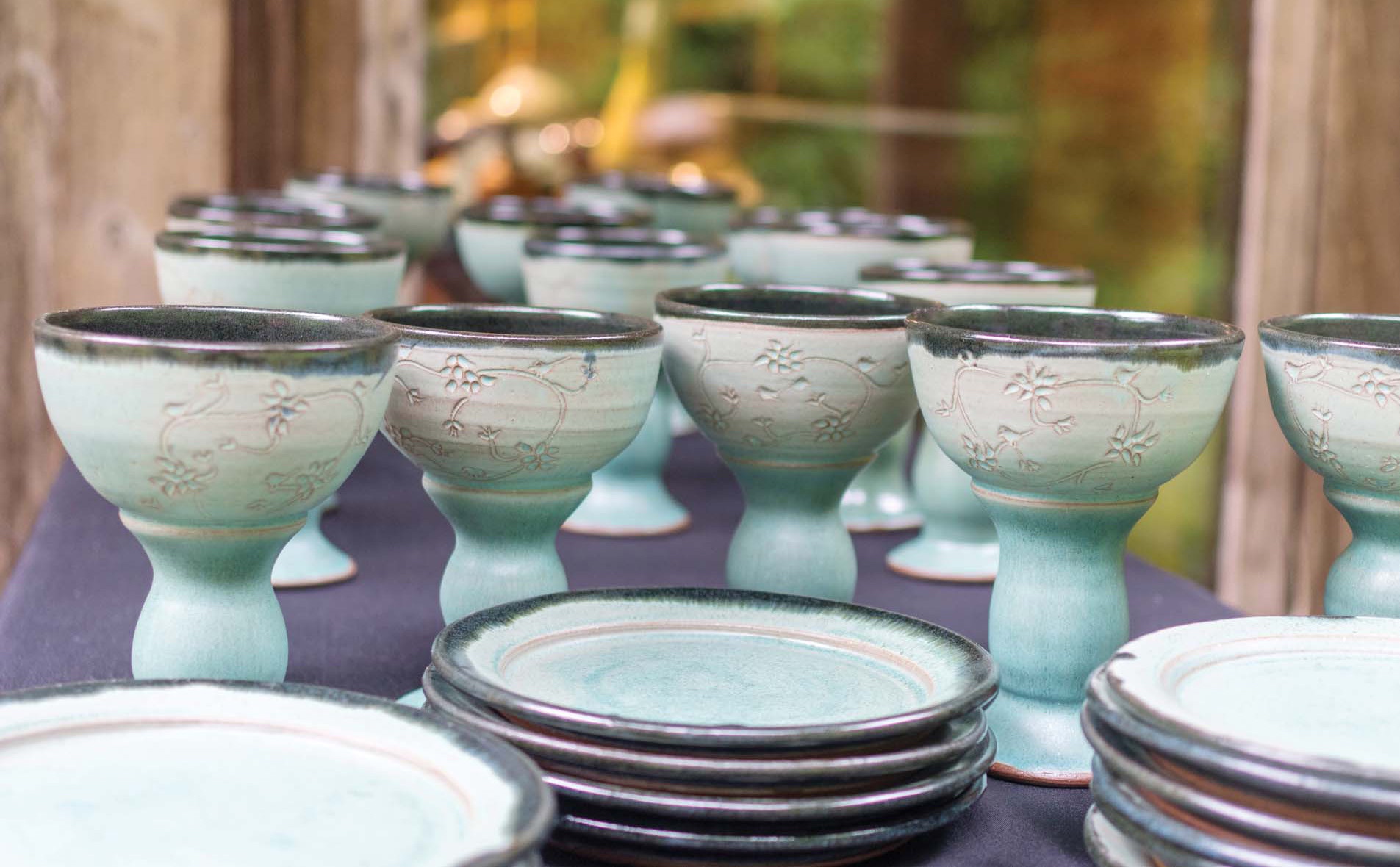
Fourteen chalice and paten communion sets are at the ready for use by the first class of female priests in the African Anglican Church. (Photos: Mary Holmes)
To Botswana, with love: Seagrove potter makes communion sets for African Anglicans
Jane Braswell
SEAGROVE — A bit of local dirt will soon be traveling 8,000 miles across the Atlantic to become part of a historic transformation taking place in Gaborone, Botswana.
Fourteen chalice and paten communion sets — crafted with local clay by master potter Michael Mahan, owner of From the Ground Up pottery in Seagrove — will be presented to the first class of female priests in the African Anglican Church, positions held solely by men until last year.
The momentous ceremony held on May 17 marked a significant shift in the church, following a decade of training and advocacy to allow women to transition into ordained ministry.
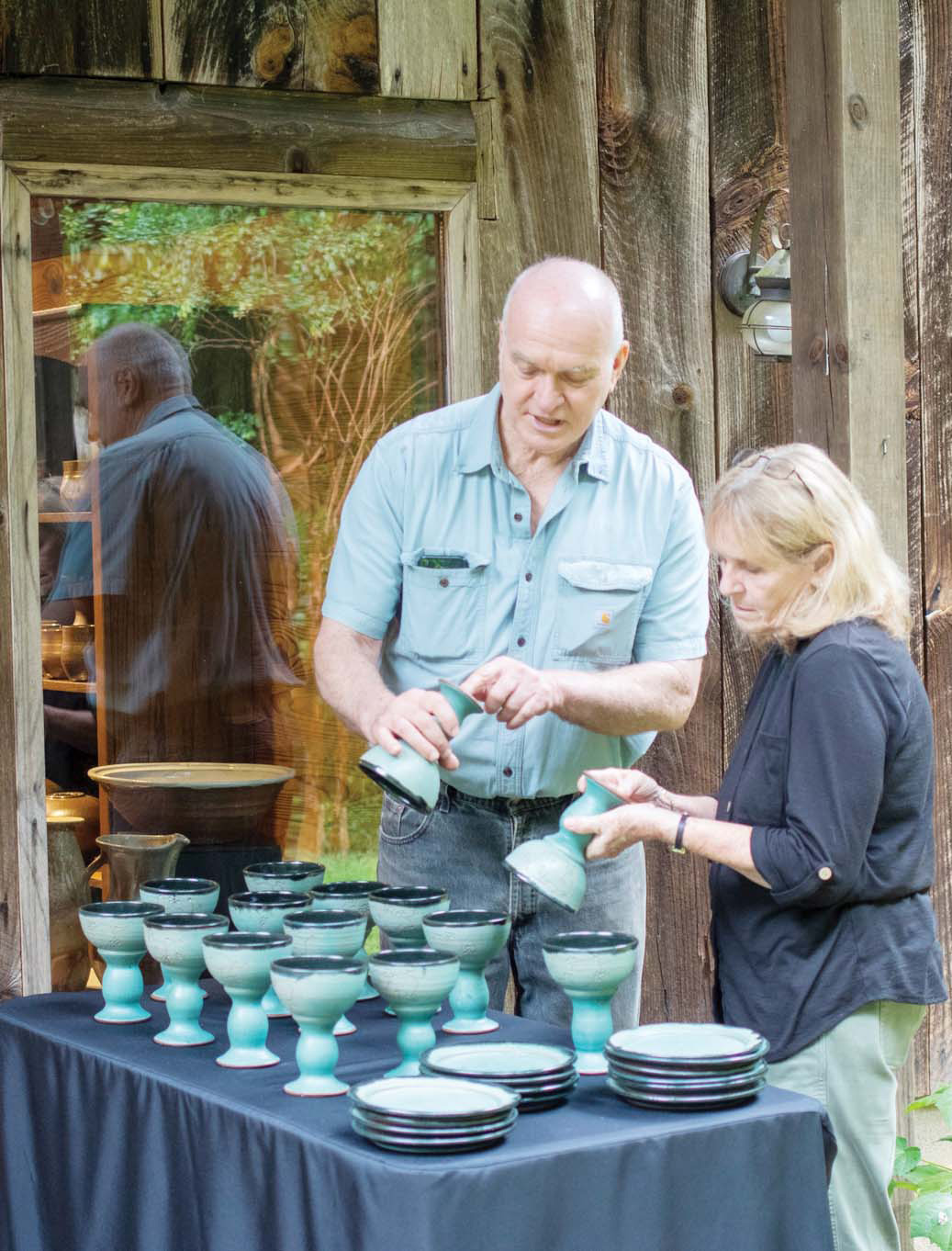
According to the Rev. Miriam Saxon, priest associate at St. Joseph’s Episcopal Church in Durham, the partnership between the Episcopal Diocese of North Carolina and the Anglican Diocese of Botswana began in 2008, at a time when women were denied leadership roles despite a severe shortage of priests.
Saxon said that when the Rt. Rev. Sam Rodman, Bishop of the Episcopal Diocese of North Carolina, made plans for a large North Carolina delegation to travel to Gaborone to be part of the upcoming ordination of the first female priests, he had the idea to present each new priest with a communion set, hand turned in North Carolina.
A long-time visitor to Seagrove-area potters, Saxon volunteered to help the bishop’s aspiration be realized, and she selected Mahan and his pottery at From the Ground Up.
“For several years, Michael has been one of my favorite Seagrove potters because of his distinctive glazes and creative design. I especially love his soul pots,” she said.
Saxon and Mahan combined their visions; she chose the soft, seafoam green for the body of both the chalice and the paten, with a black interior in the goblet. Mahan opted for a design he and his wife Mary Holmes call hedge-row motif, an international nod to the ubiquitous hedges in her native Ireland.
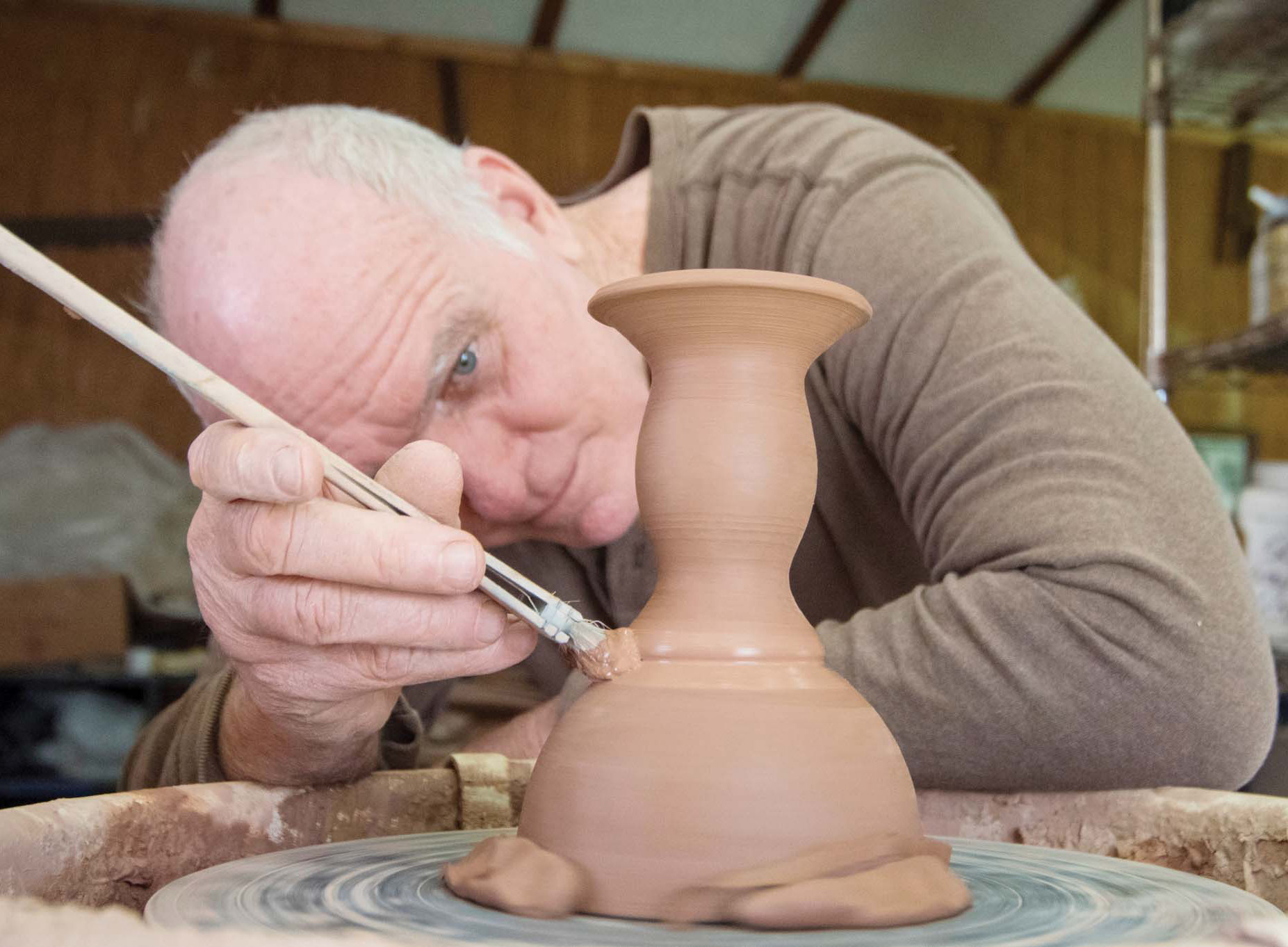
Mahan carved the foliage, adding a bird or two, to each of the still-damp, leather-hard chalices before their bisque firing.
After initial attempts at glazing obscured the carvings, Mahan said he took a tip from a fellow potter to brush layers of water over the carved area before dipping in glaze to inhibit absorption of the glaze in the decorated areas.
A final baptism of fire to about 2,200 degrees in his electric kiln completed the pots.
“It took three firings before I got it right. Then I glazed everything
and fired once more,” Mahan said. “I unloaded everything the day before Miriam came to my shop to pick up the order.”
The clay used for the feminine-shaped chalice stems and the salad-plate-sized patens was dug from the community of Okeewemee, located in Montgomery County outside of Seagrove.
The clay is one of several local recipes made at Starworks Ceramics in Star, down the road from Mahan’s shop.
“The clay is made by artists who care,” Mahan said. “They make fantastic clay bodies for potters.”
Saxon drove from Durham last week to pick up the pottery so that the first set could quickly be bundled, packed in luggage for a plane trip across the ocean for one early ordination.
The remaining baker’s dozen will be meticulously packed and spread among North Carolina Episcopalians traveling to Gaborone for the main three-hour ceremony in the Cathedral of the Holy Cross, which has a 900-seat capacity.
The service, Saxon said, is expected to attract 1,500 attendees for the priests who will serve across Botswana, a British protectorate until 1966, which is why most residents of the country can speak English.
“I am certain they will figure out how to accommodate everyone who attends the service, and they do plan to broadcast this via the internet. Possibly on YouTube,” Saxon said.
Once presented, the communion sets will be used in services as parishioners partake directly from the goblet as the priest wipes the chalice lip between sips. Communion wafers will be offered from the patens.
The North Carolina group arrived on Friday, May 15, after two days of travel, and Saxon said most were to leave for home on the day following the ceremony. Some remained to go on a safari, and others, including Rodman and Saxon, were to join with clergy and laity from Botswana on a week-long retreat about cross-cultural relationships, which Saxon described as “grounded in Scripture, with a theological focus on mutuality across cultures as children of God.”
Holmes said that she and Mahan like to hear stories of when their pottery will be in use, rather than solely decor.
“It’s heartwarming to think about all these people participating in a very old ritual — in Africa — with pots that I made,” Mahan said. “It’s an honor.”